An illustrative scenario.
The summer the Town of Riverside got ahead of the heat.
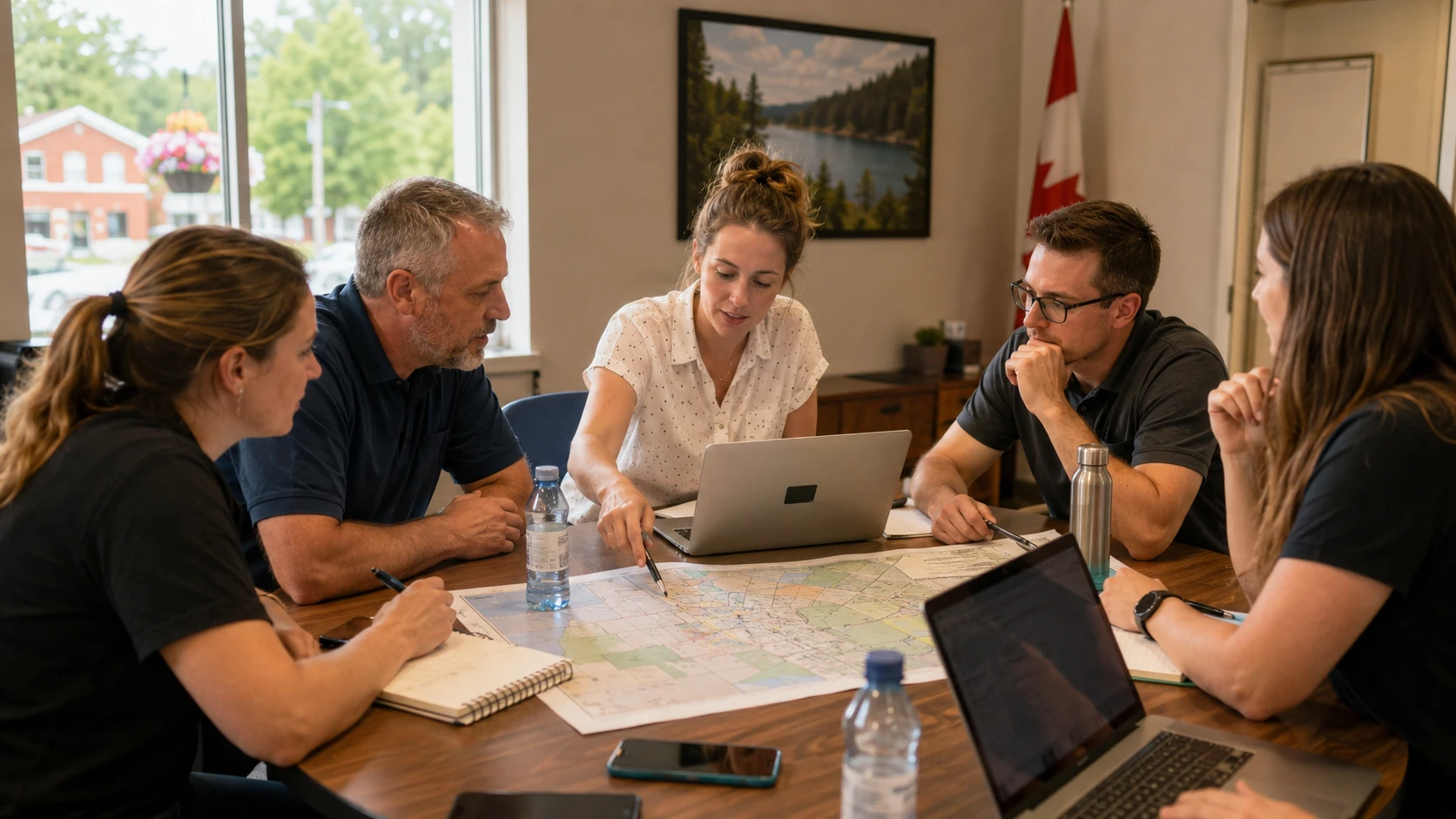
The setup
Riverside is a small Ontario town. Twelve thousand people. The municipal community care program runs a vulnerable-resident registry: 340 seniors and at-risk residents who've opted in.
For years the registry lived in a spreadsheet that got updated when somebody remembered. The protocol for a heat warning was a volunteer phone tree — twelve people calling up to thirty names each, by hand. Half the calls hit voicemail. Some hit wrong numbers. The job took most of a day and the public health nurse was never quite sure who'd been reached.
The moment
In late June, Environment Canada issued an extreme heat warning. The first one of the year. Forecast: three days at 38°C with humidex over 45.
Anne — the public health nurse who'd been losing sleep about this for years — had been talking to MyDailyCheck since spring. She had council approval to run a pilot during the heat event. The 340 registered residents were loaded into the system via CSV the day before. Each one got a verification call. Most consented; the few who didn't were noted and handled the old way.
The morning of Day One: 7 AM. MyDailyCheck started calling.
What they decided
Anne flipped the program into elevated mode for the heat event: check-ins twice a day instead of once, escalation thresholds dropped from sixty minutes to thirty.
Contact tree per resident: family member first if listed, then community paramedic, then Anne's own team. Different residents had different trees — that's how the system was set up.
Anne sat at her computer at 7 AM and watched the dashboard fill up.
A morning, now
By 8:30, two hundred and ninety-six of the three hundred and forty had pressed 1 or replied OK. By 9:00, the system had retried and reached thirty-two more.
At 9:30 the dashboard showed twelve people still uncontacted. Names, addresses, phone numbers — and a clear log of what had already been tried.
Two community paramedics rolled out. Three names cleared up on the way (texts came in). Nine doors got knocked on. Of those nine: six were fine (at the store, at the daughter's, the phone wasn't working). One needed water. Two needed AC help — one got directed to the cooling centre, one got a portable unit from the town's emergency stock.
By 11 AM the morning was done. Anne had time to plan for tomorrow. The council report at the end of the heat event was eight pages of data. Every call, every response, every escalation, timestamped. Defensible.
“When the warning came down, the roster was already covered. By 9 a.m. we knew who needed a visit and who didn't.”
— Illustrative — the kind of scenario MyDailyCheck is built to support
If this sounds like you
If you're responsible for vulnerable residents in your community — and you've watched a heat warning go up wondering if your phone tree is going to hold — MyDailyCheck was built for that. Bring your existing registry. We'll show you how it would have played out.
More for municipalities →Questions people ask
Most municipalities don't have a community paramedic team. Is this realistic for us?
The escalation can route anywhere. Family members, volunteers, by-law officers, EMS. The system is configurable per resident and per event. You bring the response team you have.
What about residents who refuse to participate?
Enrollment is consent-based. People who don't want it aren't in. The registry tracks who's opted in versus out separately from the daily program.
Does this work for cold snaps, power outages, ice storms?
Yes. Any event where you need to know your roster is covered before the worst of it hits. Elevated mode can be triggered on demand or by schedule.
What does the council report actually look like?
Exportable spreadsheet, every check-in with timestamp, every escalation, every outcome. Most municipalities use it for after-action reviews and budget justification.
Be ready for the next one.
Talk to us about a pilot for your municipality. Bring your existing registry.